The Rough Rewarding Road to Lancetillo

July 23, 2010

Zona Reyna, Lancetillo

I am sitting in an open salon of some one hundred young indigenous children watching “La Isla” quietly and attentively after having finished their hot chocolate and sweet biscuits on a Friday night in Zona Reyna, El Quiche. Not a single whisper escapes in the group as they stare intently at the Guatemalan army marching sequences and footage of the National Police Archives being recovered and the testimonies from family members of the disappearances of their family members. The crickets’ song fill the night and every once in a while the iron of a desk scrapes against the cement floor of this Catholic School. It’s cool and humid outside and I can hear the nuns in the kitchen. It reminds me of my own childhood growing up with the nuns in the United States, in a world so different than the world my family had immigrated from in Guatemala.

During the chocolate intermission break I tell them to line up against the back of the salon for a group picture. They all rush back quickly and obediently and I find myself staring at them, feeling a wave of peace.

The four hour drive from Uspantan to Zona Reyna in Lancetillo, El Quiche was the roughest terrain of Guatemalan terreceria, graded road, full of deep holes, steep switchbacks and sudden drop offs to plummeting heights where the fog rolled over the tops of the Cuchumatanes and the tree line thousands of feet below. We pass young girls carrying heavy loads of wood on their heads, children peaking out from the bottom of windows, older men with their shirts off, galoshes over there pants chatting to one another while draped along door frames. It’s late day now and we did not anticipate the terrain would take all of us to maneuver. There’s no turning back, we’re here to train a large group of young indigenous people how to tell their stories using photo and video. The result of an entire day of reporting and production resulted in these:

Puesto de Salud en Lancetillo, Guatemala from Habla Guate on Vimeo.

El Rio en Lancetillo, Guatemala en julio 2010 from Habla Guate on Vimeo.

Las Hermanas de Lancetillo, Guatemala en julio 2010 from Habla Guate on Vimeo.

Un recorrido por Lancetillo, Zona Reyna Guatemala from Habla Guate on Vimeo.

El Rio: A Photo Slideshow by Project Einstein Kids in Zona Reyna, Guatemala

Kara, Miguel, Marixa and I drove 12 hours to Zona Reyna this weekend to help our friend Emma teach a class about telling stories with multimedia slideshows to a group of Mayan teens who live in Zona Reyna. Zona Reyna is a poor, rural and isolated area located in the mountains of Quiché. Our class was part of Project Einstein Guatemala, which you can read more about here.

After Miguel gave a presentation on the principles of composition and other photographic fundamentals, we split up into four teams and went out to shoot. My team, made up of Mario, Edger, Rosalia, Fulvia, Thomas and Rolando took me out to a part of the Rio Cuatro Chorros called Las Tortugas. I taught them simple stuff like how to handle shadows made by intense sunlight, how to get up in people’s faces to take portraits, and also my best secret photo technique: always take a humongous ton of pics.

After the shoots I gave a presentation on retouching, specifically how we dramatically alter images in the advertising industry. This may have wrankled some of the journalist feathers in the room but hey that’s how I roll. The teams then made their selects, performed simple image manipulation, choose audio and created their slideshows using Soundslides – a popular tool in modern newsrooms.

Our training was a real success. The kids were super-enthusiastic and fast, intuitive learners. They’re so drawn to technology you wish they all had their own computers, digital cameras and USB modems. Above is the story my guys produced, entitled, El Rio.

Internet Cafés in Antigua, Guatemala

For those of you not retired or enjoying a mom & dad funded vacation, I present to you my list of internet cafes that you can work from:

El Portal
The cafe across from the park that never used to have internet. Well, they’ve finally finished remodeling the back and it’s quite cozy – there’s only one plug but you can sit right next to the router. Hell, you could probably plug-in an ethernet cable into the back if you wanted. Here’s a speedtest.net diagnostic on El Portal:
El Portal speedtest


Café Barista
Barista is my default location. Which is funny, because the bandwidth sucks. The router is located underneath the cash register which isn’t really ideal placement because everyone sits on the other side of the cafe, behind a thick block construction wall. Anyway, I like Barista because it feels like an airport: shiny, clean and bright. There’s also a guard who watches me write HTML over my shoulder and I swear he must be able to go home and bang out markup by now.

Bagel Barn
Bagel Barn has two wireless routers which is such a good idea you’d think other places would do it. The vibe here is dirty backpacker, which I can do every now and then. What I can’t do is hot- and the barn heats up like a mini-Petén. Beware of skype’ing gringos siphoning off the bandwidth to a measly dribble!

Café Bourbon
Newly introduced to me by Don Rudy, I’ve worked from here a few times as the vibe is super chill and totally desolate during the day, just the way I like it. The bandwidth is good, however, they told me once that you can only be there an hour. Your mileage may vary.

Rainbow Café
I’ve only included Rainbow Café in order to warn you how bad the wifi is. It’s drop-dead terrible, pun intended. And there are no electrical outlets. The food is awesome and there are usually hot hippy chicks in yoga pants cavorting all about, but this ain’t the place to get online.

Did I miss any? Please share your knowledge in the comments below.

I Hang My Umbrella Here

As the sky cries an endless river of rain during a gray Monday that began with thick clouds, I take shelter in a library – the Spanish Cooperative library in La Antigua. I run across the courtyard surrounded by ruins, past everyone huddling at the doors like birds waiting for the rain to stop (why Guatemalans never have umbrellas with them during rainy season I still don’t understand), close my umbrella dripping over my clothes and with a light footstep make my way to the back of the building. It’s only 5 PM and I have one hour, I say to myself, but nothing can encapsulate the relief I feel when I see the wooden doors flung wide open from the wide Spanish columns that open up to the cobblestone courtyard lined with park benches under manicured trees. I enter the quiet warm embrace of books, carefully placed lights, necks bent over newspapers as in prayer, hear the soft clicking of people on computers and the languid footstep of someone scanning the stacks. The librarian lets me pass, no one says a thing and it’s our conspiracy. This is where I grew up, among libraries, all over the United States in more than 20 cities and states, just peeking out from the library way back in the corner like those hiding places between the clothes we’d all find, cozy, quiet and ripe with unspoken possibility. The fact that I am in a library in Guatemala is like being the smallest wooden Russian doll, right there in the very center, held by some invisible force of belonging and being left to one’s own recourses.

There aren’t enough of these libraries in Guateamala, much less for children, which is why I value the work that the Riecken Foundation is doing with setting using the simple building block – a community library with free Internet – to build a human being and, ultimately, as a springboard for a community.

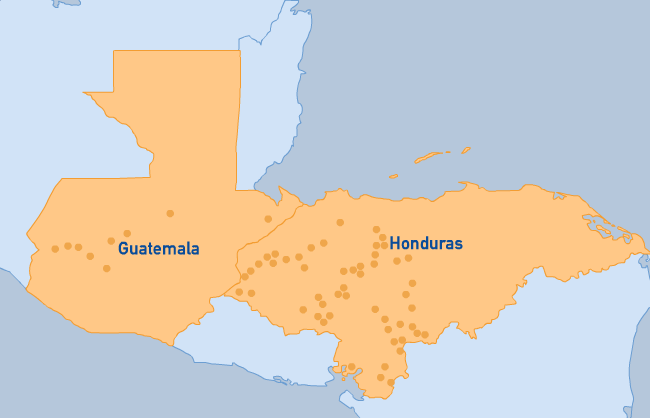
Check out some of the libraries they’ve already set up in Guatemala and Honduras:

Cellular Saved the Radio Star

One perk of staying up until 3 AM each night is that I get these bursts of creativity and then I drag my husband and my friends with me on bizarre ideas like thisSXSW proposal that ended up with us recording a cover of a famous Buggles tune. We called it “Cellular Saved the Radio Star” and I think you might recognize it:

Cellular Saved the Radio Star by karaandrade

“Cellular Saved The Radio Star”
Original by: The Buggles

(Verse 1)
I heard you on your phone in the Honduras coup
Lying awake intent on tuning in to you
Me in the States did not stop you from comin’ through
Oh-a oh
You took the credit for your cellphone reporting
Broadcasting stories with the new technology
and now I understand issues you’re texting in

(Bridge)
Oh-a oh
I met the people
Oh-a oh
What did they tell me?

(Chorus)
Cellular saved the radio star

(Verse 2)
Radio came into your phone
Oh-a-a a oh
And now we listen about the state of things
Broadcasting from our hands like awesome techno kings
And you remember how the landline used to ring

(Bridge)
Oh-a-oh
You were the first one
Oh-a-oh
You aren’t the last one

(Chorus)
Cellular saved the radio star

(Bridge)
In my ear and on my screen
We can’t rewind/it’s all been seen
Oh-a-a-a oh
Oh-a-a-a oh

(Keyboard solo)
(Chorus)
Cellular saved the radio star

(Verse 3)
In my ear and on my screen
We can’t rewind it’s all been seen
Radio came into your phone
Put the blame on our cellphones

(Vocal break)

(chorus outro)
Cellular saved the radio star

Mobile technology leapfrogs in countries with a poor to non-existing ground-based communication infrastructure. The reality for Latin America’s Telecom advantage is starting to influence the way information is received, created or shared. As an example, news organizations and others heard through people’s cellphones provide text or breaking news SMS alerts free of charge, and ask listeners to contribute news, comments traffic reports, often read out on-air. As an example, during a major electrical blackout affecting almost all departments in Guatemala in Oct 2009, people messaged radio stations that were reading SMSs out loud while listeners tuned in via their $10 cellphones bought at the local market.

Cellphones are vital for airing local broadcasts in their own indigenous languages. Daily about community radio volunteers broadcast live from cellphones to their communities – translating to their indigenous language. On the other end station volunteers transmit and broadcast the message live via the cellphone to the radio transmitter. The cellphone becomes a microphone, radio station, audience and distribution.

Some local studies in Latin America have reported above 60% illiteracy rates, why cellphones enabling local and national information to be shared in a cheap way – voice-based and ubiquitous. This broadcast radio revolution Americans long ago left behind with the birth of the podcast is underway in the forgotten backyards of the United States.